How Much Do You Really Need to Retire Comfortably? The Number Most Pre-Retirees Get Wrong

Lew Baker's RetirementCare Framework for Building a Retirement That Can Take a Hit and Keep Standing
Back in my years at military school, they taught you something simple early on: you don't get to pick the wind. You pick your training, your preparation, and your discipline... and that's what determines whether the landing hurts or whether you walk away ready for the next challenge.
I've come to believe retirement works the same way.
Over 30-plus years of sitting across the table from professionals, veterans, business owners, and families getting ready to hang it up, I've noticed a pattern. Almost everyone has a number in their head... "I'll be fine with two million," "I just need my pension and Social Security," "We've got a paid-off house, we're good." And more often than I'd like, that number was built on hope, not on math.
This isn't a knock on anyone. It's just the nature of retirement planning in 2026: the rules have changed, inflation has reset expectations, healthcare costs keep climbing, and the old rules of thumb... the "4% rule," "80% of your income," "you'll spend less once you retire"... don't hold up the way they used to for a lot of families.
So let's fix that. Let's build your real number.
Why "Rules of Thumb" Get Good People Into Trouble
I want to be straight with you: there is no universal retirement number. Anyone who tells you "you need exactly $1.5 million" without knowing your life is guessing. But there are real, measurable inputs that determine your number, and most people simply haven't run them.
Here's what tends to get underestimated:
Healthcare costs before and after Medicare. A healthy 65-year-old couple retiring today can expect to spend a substantial six-figure sum on healthcare across retirement, and that's before factoring in long-term care.
Longevity. Many people plan to age 85. Plenty of my clients... especially the disciplined, active ones... are living well into their 90s. That's 10, 15, sometimes 20 extra years your money needs to cover.
Taxes on the way out, not just the way in. Traditional 401(k)s and IRAs feel like a pile of money, but a real chunk of that pile belongs to the IRS. Required Minimum Distributions can push retirees into higher brackets than they expect.
Inflation on the things that matter most. Healthcare and long-term care costs have historically outpaced general inflation. A "comfortable" lifestyle in your 60s can require meaningfully more income in your 80s just to stay level.
Lifestyle creep in year one. Contrary to the myth that retirees spend less, many spend more in the first five to ten years... travel, hobbies, helping kids or grandkids, finally doing the things they put off. Spending often follows a "smile curve": higher early, lower in the middle years, then higher again late in life due to care costs.
None of this is meant to scare you. It's meant to brief you... the way I'd brief a team before a mission. You don't fear the terrain once you understand it. You plan for it.
Realistic Benchmarks: What "Comfortable" Actually Costs
I'll give you some grounded planning benchmarks. These are not guarantees, and they are not a substitute for a personalized plan... every family's mission is different. But they're a useful starting point for your own math.
The income replacement benchmark. A common industry planning assumption is that retirees need somewhere between 70% and 90% of their pre-retirement income to maintain their lifestyle, with higher earners often needing a figure closer to 100% once you factor in the loss of tax-advantaged savings contributions and the desire to travel or support family. I've found the "80% and you'll be fine" assumption is often too low for the first decade of retirement, especially for active, engaged retirees.
The healthcare reserve. Fidelity's ongoing retiree healthcare cost estimates have suggested a single 65-year-old retiring today should plan for roughly $165,000 or more in healthcare expenses throughout retirement... and that figure doesn't include long-term care. Long-term care itself can run into six figures depending on your state and the level of care needed. This is one of the single biggest blind spots I see.
The withdrawal rate benchmark. The traditional "4% rule" was built on historical market data and specific assumptions about time horizon. Many planners today use a more conservative range... somewhere between 3% and 4.5% depending on your time horizon, portfolio composition, and flexibility... as a starting point for sustainable withdrawals. This is a planning heuristic, not a promise; actual sustainable withdrawal rates depend heavily on market performance, sequence of returns, and your personal circumstances.
The Social Security and pension gap. Most people underestimate how much of their income Social Security and pensions will actually replace, and they underestimate how much a delayed claiming strategy could add to their guaranteed income floor. This is one of the highest-leverage, lowest-risk decisions in retirement planning… and one of the most commonly mishandled.
I want to be clear about something important here: these are educational benchmarks, not predictions or guarantees for your situation. Markets move. Health changes. Legislation changes. This is where a personalized plan... not a rule of thumb... becomes mission-critical.
The RetirementCare Framework: Four Pillars of a Retirement That Holds
When I sit down with a family, we don't start with investments. We start with the mission... What does a secure, meaningful retirement look like for you? Then we build backward from there using four pillars.
Pillar 1: Income Architecture. Before we talk about growth, we talk about income you can count on… Social Security timing, pensions, annuitized income where appropriate, and how those pieces coordinate with your portfolio withdrawals. A unit doesn't advance without knowing where resupply is coming from. Your retirement shouldn't advance without knowing where your income is coming from either.
Pillar 2: Tax-Efficient Positioning. This is where I see the most missed opportunity. Many pre-retirees have the bulk of their savings in tax-deferred accounts, 401(k)s, and traditional IRAs, and haven't considered strategic Roth conversions during lower-income years, tax-bracket management in retirement, or the sequencing of which accounts to draw from first. Done thoughtfully, over years, this can meaningfully reduce lifetime tax drag and the tax burden left to your heirs. Done carelessly, it can create unnecessary tax bills. This requires personalized analysis... there's no one-size-fits-all conversion strategy.
Pillar 3: Risk & Resilience Planning. This includes healthcare and long-term care planning, insurance review, and building in enough flexibility that a market downturn in year one of retirement doesn't derail the whole mission. Sequence-of-returns risk is real, and it's one of the most under-discussed dangers in retirement planning.
Pillar 4: Legacy & Stewardship. For many of my clients... especially veterans and families of faith... retirement isn't just about you. It's about what you leave behind: to your spouse, your kids, your church, causes you believe in. This means beneficiary reviews, estate document coordination with your attorney, and thinking about legacy as a deliberate plan rather than an afterthought.
A Story From the Field
I once worked with a retired officer... steady, disciplined, did everything "by the book." He had a healthy 401(k), a modest pension, and a plan to retire at 62. On paper, it looked solid.
When we ran the full picture... healthcare costs before Medicare eligibility, the tax impact of his RMDs starting years down the road, and what would happen to his wife's income if he passed first... we found real gaps. Not catastrophic ones. But gaps that, left unaddressed, could have meant real strain in his mid-70s and a reduced legacy for his family.
We didn't panic. We adjusted the plan: a modified Roth conversion strategy over several years, a healthcare bridge strategy before Medicare, and a revised Social Security claiming approach for both spouses. None of it was exotic. It was disciplined, sequenced execution... the same principle that gets a team through a long, demanding project. Small, correct decisions, repeated consistently, add up to mission success.
This story is illustrative of the type of planning process I use with clients; it does not represent a guarantee of results, and outcomes vary based on individual circumstances, market conditions, and other factors.
Your Action Plan: Five Steps to Find Your Real Number
Calculate your true expense baseline... not a guess, an actual line-item review of current and projected spending, including healthcare and periodic large expenses (roof, car, travel).
Inventory every income source... Social Security, pensions, rental income, part-time work... and understand the actual mechanics of each, not just the headline number.
Stress-test your tax exposure... look at where your money sits (taxable, tax-deferred, tax-free) and whether a multi-year strategy could reduce your lifetime tax bill.
Build a healthcare and long-term care reserve... this is not optional planning; it's mission-critical planning.
Get a second set of eyes on the whole picture... not just the portfolio, but the income plan, the tax plan, and the legacy plan together, as one coordinated strategy.
Freedom... and a Plan Built to Last
I attended military school growing up, and I've spent the decades since building Retirement Care Plans and Rock Creek Wealth Planners... not to sell products, but because I believe families... especially the ones who've sacrificed the most, our veterans and military families... deserve a retirement built on preparation, not hope.
Your retirement number isn't just math. It's the foundation for the freedom to spend time with grandkids, support your church or the causes you believe in, and leave something meaningful behind. That kind of freedom doesn't happen by accident. It happens through disciplined planning, executed with precision, well before the day you walk away from work.
Past performance is not indicative of future results. This article is for educational purposes only and does not constitute personalized financial, tax, or legal advice. Please consult a qualified financial professional, tax advisor, or attorney regarding your specific situation before making any financial decisions. No strategy can guarantee income, returns, or specific outcomes.
If you're within 10 years of retirement... or already there... and you want to know your real number, not a rule of thumb, let's talk.
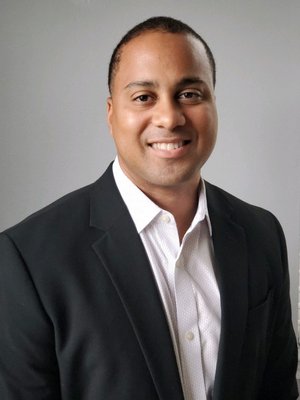
Lewis Baker, CFP®,CEPA,CRPS
Retirement Care Plans
"Guiding Families Through Every Stage of Retirement."
📧 lbaker@retirementcareplans.com
📞 Call/text: +1 301-605-9020